Sunday, February 23, 2014

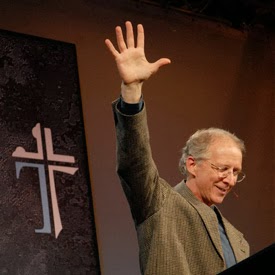
John Piper is Coming to My Church


Several years ago, say 2005, this may have been too much for me to handle. You could say I would have been excited. You could even say I would have been sinful in my excitement. That is, I would have been more excited by the presence of John Piper than the presence of Jesus through John Piper. As I have said before, I was in the middle of spiritual puberty. It was an awkward time. And my exposure to the teaching of John Piper at that time was significant.

Now, I can look back to those days with a small measure of maturity, and feel a great sense of gratitude to my Lord and Savior for the ministry and the person John Piper. I can look ahead with great humility and thankfulness that God would put me in a local church body, and grant that church body to be a place where he would use John Piper to speak his word with boldness and equip and encourage us to more passionately follow Jesus. God is very, very, very good.

Sometime in 2007, a little bit after those awkward times I mentioned, I remember that some people would smirk when I quoted John Piper in a small group or Bible study, and they would give me this look and seem to say, “Why does he always quote John Piper? Why is he always reading and listening to John Piper? Does he worship John Piper?”

To which I now respond: What if you went through your whole life, and upon standing face to face with King Jesus, the Creator and the Judge of the universe, you realized that no one had ever told you just how important this moment was, and just how much you would regret, even if having been saved by the skin of your teeth into eternal life, not living your life passionately for the glory of God, and instead for temporary, fleeting pleasures? Imagine if no one boldly and authoritatively had told you that illusions such as retirement, and money, and toys, and leisure, were all unbiblical and potentially devastating if not used for the glory of Jesus Christ. Imagine if you sought after all these things, not only because of evil desires to pursue your own pleasure, but also because no one had ever told you that you should ever consider fervently seeking after anything else.

Then imagine if someone came along and passionately pleaded with you, in a manner and style totally shocking to you, and with a boldness and authority totally convincing to you, that you should not waste your life but instead give it up for Christ and His Kingdom, and whatever that means for you; whether early death, or suffering, or the lack of luxurious years of retirement or a comfortable life; whatever that means for you, it will be better and more fulfilling and more satisfying and more eternal than standing on that day in front of King Jesus with regret. Wouldn't you pay attention to someone who talked like that? 

I would, and I have in John Piper.

John Piper himself is but a vessel. He is like a vapor, same as you and me, who will be gone before too long. But I thank God for him, because he has shown me a picture of Jesus and a passion for Jesus, and has given me such a desire to live for Jesus that without his example, perhaps I never would have seen such a picture, or never have had such a desire. And that would have been unfortunate for me on that day when I am to give an account to my Lord and Savior, not to mention for the people that could, perhaps, be influenced the same way now through me.

Saturday, February 1, 2014

Quicksand of Conscience


"O Father in heaven, thou who probest the souls of men, open a little ray of light for me into the bottomless darkness of the human heart, in order that I may penetrate for an instant into its mysteries; send one swift beam for me into the depths, in order that I may see, as in a flash of lightning, the forces that wage war for the possession of a man's soul. For who can pierce, who can weigh, who can even grasp the dark things which lie, involved like demons in an abyss, in the coils of the mind of man? What were the powers which worked in the young man of Tarshish that he might carry out the work of the Evil One?"

These words, written by Sholem Asch, are in reference to Saul of Tarshish (Tarsus), who later became the Apostle Paul and author of most of the New Testament. Asch was a Jewish scholar / historian who wrote a fictional trilogy made up of the novels The Nazarene, The Apostle, and Mary. In The Apostle, Asch draws on his extensive knowledge of Jewish culture and rituals, and puts the character of Saul right in the middle of the early church and the rise of the "sect" of those who followed the "false Messiah". Interestingly, Asch portrays the conversion of Saul in dramatic fashion, and goes on to highlight the truth of Jesus, "Yeshua of Nazareth", as the true Messiah. In doing this, he offended Jewish sensibilities and led New York's leading Yiddish newspaper to drop him as a writer.

This Apostle that Asch portrayed so vividly, the man who arguably contributed more to the spread of Christianity, save Jesus Christ himself, than anyone else who has ever lived, is for us the most profound example of the wickedness of the human heart. How fitting, and amazing, that this same man would go on to write the words of Romans 1, stopping the mouths of all people who would attempt to justify their suppression of truth and resulting depravity, in front of a holy God. Paul knew this to be the true condition of the human heart, because it was the condition of his heart.

"Saul was shamed in all his depths by the action of this simple man, who had so disarmed him he had been unable to answer and had been driven to rage and bitterness. But who was this whom he had called 'the lord'? Who had he been who was able to implant such love in the hearts of the simple that they were ready to be thrust out of Israel for his sake? Who was the man who had spread such teaching among the broken of spirit that they could stand before the learned and disarm them with the sword of their faith? Who was he who had sent such a light into the dark pits of the poor? Who had given the strength of rocks to the shattered? Who was he whose fall had been interpreted as the supreme victory, whose weakness was seen as unconquerable strength, whose humiliation had been crowned with the glory of the Messiah? Who was he? Who?"

Asch imagines the agony and internal battle within Saul's soul in the days before his experience on the road to Damascus. He portrays Saul as deeply conflicted, replaying in his mind the love and the courage and the grace in the faces of those whom he had personally persecuted. But each time his confusion and pain lead him deeper into the abyss and sharpen his resolve to prove that this Yeshua is not the long-awaited Messiah but a demon. I wonder if this portrayal is accurate to the feelings of Paul before he was confronted with the risen Lord? I imagine it is. I imagine this internal battle, and the reaction of further suppression once light begins to be revealed, is remarkably close to the testimony of all people. We know God, we see him, and we suppress this truth. Then, he reveals himself more to us, through someone or something, and we see him more clearly, but still not to our liking, we suppress deeper. And deeper.

Is this not similar to the attitude of all those outside Christ, as the Spirit begins to move in their heart to shine the light of the glory of the grace of God in the face of Jesus Christ? Until he actually does shine this light, once and for all, revealing himself ultimately in all his glory, we are in the equivalent of a quicksand of conscience. Sinking into an ongoing suppression and destruction, only to be rescued by the grace of the Lord Jesus Christ. Do we look at people around us in this way? Do we pray that the Spirit would move in their heart and convict them of sin, and then reveal Himself to them in so dramatic a way that they would see Jesus and believe? Do we see people, not as enjoying the pleasures of life, but as sinking into quicksand? And do we realize that they do not have the strength, or the wits, to help rescue themselves from this condition? Do we truly know that we don't either? Do we see people around us, not as simply drowning in the water waiting for a lifeline, but dead at the bottom of the ocean, needing new life? This is how it happens, and once Jesus reveals himself, his grace is irresistible. O, how we should pray that he would do this in those close to us! Listen to Asch's description of the experience on the Damascus road:

"At the edge of the road lies Saul, as though a mighty hand had flung him down. About him stand his companions, paralyzed with amazement. His face is turned up to the open sky, his eyes are open, foam breaks out on his lips. His companions hear Saul's voice. He is speaking with someone. They catch a few words. They know he is seeing a vision. They are terrified by the dread occasion of which they are the witnesses.

"Before Saul's face stands a man. A man who is spirit and flesh and blood. He is taller than any man Saul has ever seen. Yet he is not a giant; he is an ordinary man; a Rabbi, in prayer-shawl and phylacteries; with great eyes, mournful yet radiant, filled with faith and love, eyes such as Saul has often seen among the disciples. His beard and earlocks are black, interwoven with gray. A man, not an angel; clothed in white, as for the Sabbath. Even in his present condition Saul's thoughts are clear enough for him to recall that God created man in His own image. Therefore he who stands before him in the likeness of a man may be a spirit of the Lord. But he stretches out his hands to Saul, and the sorrow on his face is a human sorrow. His eyes are filled with tears, in the midst of which swim the brown pupils. His lips are distorted in pain, as though all the anguish in the world had passed into him. He stretches out his hands to Saul, and the unhappy voice is that of a simple man who suffers, even as Saul has seen so many suffer:

"'Saul, Saul, why dost thou persecute me?'

"In the voice Saul hears the silent protest of all those whom he has tormented; in the face of the man, in the expression of pain on the thin lips, he sees all the pain of all those who he has caused to suffer.

"The men standing about Saul hear him ask: 'Who art thou, lord?' Saul hears the reply: 'I am Yeshua of Nazareth, whom thou persecutest.'"

As we know from Scripture, Saul next asks what he should do, and the Lord begins to show him. It is from this man whom we have the Book of Romans. It is the Spirit of this Lord, "spirit and flesh and blood", "mournful yet radiant", who speaks to us still today through His word. And it is this question, with which every person is confronted as they sink deeper and deeper into the quicksand of their conscience: "Why dost thou persecute me?" Why do we suppress the truth? The truth that is plain to us, because God has shown it to us? For his invisible attributes, namely, his eternal power and divine nature, have been clearly perceived, ever since the creation of the world, from what has been made. So we are without excuse. For although we know God, who do not honor him as God or give thanks to him, and our thinking has become futile and our foolish hearts are darkened. Claiming to be wise, we have become fools, and exchanged the glory of the immortal God for images resembling mortal man, and birds and animals, and crawling things. Yes, this we have done. All of us. And Jesus asks us with "lips distorted in pain, as though all the anguish of the world had passed into him" - why do you persecute me? Why do you exchange my eternal glory for temporal idols?

The only coherent response to this question, given our condition, so vividly described in Romans 1, is: what must I do, Lord? We have no reasons to offer as to why we have done this. We have no rebuttal. Our mouth is stopped. Except to say, if we would, "what must I do?"

Wednesday, January 1, 2014

A Year in Books


I like to read. There, I said it. Last year, my wife and I each put together a reading list, to focus our love of reading into the most helpful and efficient plan as possible. It was not a contest, but I don't mind admitting that my wife listed 10 books to read in 2013, and she read 12. I listed 20 books to read in 2013, and I read 9. Both of us changed our lists through the year so that some of the ones we read were not on the original list. But however you look at, my wife is either better at goal setting or goal accomplishing than me (or both!). So now, in 2014, I should apply the lesson learned: set a realistic and achievable goal. Should. But won't. I am a glutton for punishment. I have more books on my to-read list this year. The difference this year is that I know I won't read them all, and I know the list will change again. And I tried to list by topics of what I want to be reading about. My hope is that these topics stay mostly consistent every year going forward. For example, I always want to read a book about suffering every year. That doesn't sound exciting, but I think its important. Also, I want to read a book by Tim Keller every year - I think he will write enough for this to be possible in my lifetime. But more on all that later. First, a brief summary of the 9 excellent books I read in 2013.

1. Lit!: A Christian Guide to Reading Books - Tony Reinke

This is a good one to start with, even though it wasn't the first I read in 2013. My wife gave me this book for my birthday (in January), and I started reading it right away. It is a great, quick read and very helpful. Among other things, it encouraged me about the possibility, and importance, of reading multiple books at one time. Divided by type of book, and environment where you read (morning in the family room, in bed at night, at lunch in the office) this is a great way to be reading a lot and without overwhelming yourself. Also, Reinke encouraged what was already a growing desire with both my wife and I: read more fiction. Fiction is what got me in to reading as a kid, and I now am fully convinced that it will keep me in to reading as an adult. My list this year reflects my desire to read a good dose of fiction.

2. Redemption: Freed by Jesus from the Idols We Worship and the Wounds We Carry - Mike Wilkerson

I actually started this book in 2012. But it counts for 2013! We went through the book of Exodus at my church, and this book is a story-oriented book about real people and real sin and suffering, paralleled with the real stories of Exodus. It was a eye-opening account of the two things that everyone in the world faces - sin and suffering -  and an amazing description of the grace of God in redeeming us from both of these things, just as he did with the Israelites at the time of the Exodus, and just like he always does through the blood and resurrection of Jesus Christ.

3. Evangelism and the Sovereignty of God - J.I. Packer

This book was amazing. I wish I could quote the whole thing here. Read it! I have had this book on my radar for a while, but this year my wife and I had the privilege of serving on an Evangelism Team at our church, focusing on ways to infuse evangelism into the culture of every ministry, and into the life and practice of every member. God did amazing things through this effort. And this book gave me great perspective and conviction on God's desire and plan to reach the world through the proclamation and demonstration of the gospel through his believers. Not without us! This book is definitely in my "read again" category. Two important reminders that I need from Packer: "It is a tragic and ugly thing when Christians lack desire, and are actually reluctant, to share the precious knowledge that they have with others whose need of it is just as great as their own." And also, "We all can and should be praying for the salvation of unconverted people, particularly in our families, and among our friends and everyday associates."

4. Biblical Eldership: An Urgent Call to Restore Biblical Church Leadership - Alexander Strauch

Wow, this was a full year. I also had the amazing and humbling privilege of participating in a Shepherd Development program at my church, learning and being exposed to the leadership of a healthy church. And let me tell you: by the grace of God, College Park Church is exceedingly healthy. Among other things, this experience gave me a firm conviction to aspire for the office of an elder, which as Paul says to Timothy, is a noble task, until God would see it fit for that aspiring to become reality. I pray that such timing would be very clear to me and my church. This book, which we were required to read for the program, was long and a difficult read, but was extremely beneficial and enlightening. God really does desire that his church, dispersed in local bodies of believers, be spiritually led by elders, whose qualifications and clearly specified, and the dynamic of how this should work for the benefit of the body is explained in Scripture. It is a very encouraging thing to realize, and very humbly that my wife and I, and God-willing future children, sit under the leadership of such a biblical and helpful structure of leadership and shepherding.

5. Paul: A Novel - Walter Wangerin, Jr.

This was the most enjoyable book I read this year. I picked this up at Half Price Books several years ago, and back then expected it to just be decor on my book shelf. But then I was encouraged to read fiction, so I put it on my 2013 reading list, and picked it up mid-year sometime. It was long, but I didn't want it to end. Even though it was a fictional account, I was blown away by the fact that many of the stories that Wangerin used to build events and characters around, were based on actual stories either in the Book of Acts or implied in Paul's epistles. I always had a Bible close by as I breezed through the chapters of this book, and it gave me a very wide perspective on and interest in the character and experiences of the Apostle Paul. So much so that I have a book about Paul on my list this year as well.

6. Uprooting Anger: Biblical Help for a Common Problem - Robert D. Jones

Each year at College Park we have a spotlight event focusing on community life, where the entire church goes through the same topic in small groups. This year the topic was anger, and this book was a great supplement to the studies and conversations we had. Who knew that we all had such an anger problem? I didn't think I was mad, but I was, and I am. What is easily dismissed as frustration or annoyance is really at the root an angry heart that expects something or wants something that usually comes from selfish motives rather than legitimate needs. There is a difference between righteous anger and sinful anger, but at the end of the day, only God really has righteous anger (anger against injustice), and all our anger is more or less sinful. The gospel gives us hope that we can be forgiven of this, and even in our anger, by the power of God we can avoid being sinful.

7. Every Good Endeavor: Connecting Your Work to God's Plan for the World - Tim Keller

This was the best book I read in 2013. Paul was the most enjoyable, but this was the best. And I knew it would be. It covers one of my favorite topics, which on Twitter I identify with #WorkMatterstoGod. As soon as I can, I will post my thesis on this topic, and the heartbeat of how I connect my profession with my calling. This book, as Keller is so brilliant at doing, takes several books and resources on this topic and quickly summarizes them, and then connects them and adds to them in the most helpful way possible. Keller talks about God's plan for our work, our problems with work, and then explains the gospel and work. As I said, more to come. but this book is arguably in the top ten most important books for me because of the relevance for my life.

8. The Evangelization of the World in This Generation - John R. Mott

I love rare and used books. Usually, I buy them for a collectors item only, and in many cases they are not in good enough shape to read, if I care anything about keeping them in decent condition (which I do). But the time seemed right this October, during the REACH spotlight event at College Park on global missions, to dive into this book I had on the shelf and expose myself to some early 20th Century perspective on missions. It didn't let me down. The title alone is telling and convicting. The evangelization, or the proclaiming of the gospel to everyone in the world, in this generation; well, this book was written at least a generation ago, depending on your definition of generation. And the world is still not completely evangelized. But if you need convincing that it should be, and it is God's desire and command that it will be, read this book. Even in its repetition it successfully brings home the point that the whole world is included in the call. And, particularly interesting is the connection to Jesus' words in Scripture that it is after this happens, namely, "this gospel of the kingdom will be proclaimed to the whole world as a testimony to all nations", that the end will come. The end will not come until this happens, and this should happen in this generation, according to Mott and many others. Does that mean that the end will come in this generation? Whoa.

9. Jonathan Edwards Resolutions and Advice to Young Converts

My wife got this little book for me for Christmas, and I snuck it in this year because it is very short. But I want to carry it in to the new year re-reading and reflecting on often, because it offers more powerful resolutions than anything I have even imagined. Let me just give you a few examples: "Resolved, never to do anything that I should be afraid to do if it were the last hour of my life. Resolved, to act, in all respects, as if nobody had been so vile as I, and as if I had committed the same sins, or had the same infirmities or failings as others; and to let the knowledge of their failings promote nothing but shame in myself, and prove only an occasion of my confessing my own sins and misery to God. Resolved, when I feel pain, to think of the pains of martyrdom and of hell." A bit more powerful than working out more or keeping my inbox clear, huh?

2014

So that brings us to this year. As I said, I tried to make this list based on topics that I always want to be reading about. It would seem to make sense to have only book for each category. But sometimes I don't make very much sense. Also, the topics or categories are not all inclusive, and could themselves change within the year. For example, two of the categories are "Tim Keller" and "C.S. Lewis", because I want to read a book by each of them every year. I could also make John Piper as a unique category, but in the case of this year I have a Piper book in another category. Additionally, some of the categories overlap. So, whether it is apparent or not, I have a method to my madness. Without further adieu, here is my 2014 reading list, by category. It is bold, unrealistic, and evolving. Wish me luck!

DISCIPLESHIP

1. Gospel-Centered Teaching - Trevin Wax

I hope this to be a real practical help for small group leadership.


2. Gospel-Centered Discipleship - Jonathan K. Dodson

I hope this to complement well the initiatives and focus at our church on real life-on-life discipleship for the purpose of multiplication.


3. Instruments in the Redeemer's Hands - Paul David Tripp

I was given this book upon becoming a small group leader at College Park. Both for myself, and others in my life, I trust this will be a valuable resource to counsel and shepherd others biblically.


4. A Long Obedience in the Same Direction - Eugene Peterson

The emphasis on perseverance is what is intriguing to me about this book. And it comes highly recommended by a pastor at my church.


FICTION

5. The Silmarillion - J.R.R. Tolkien

I have started this many times, most recently in 2013, but this year I am committed to reading it all the way through. The new release of the Hobbit trilogy has reawakened my interest in Middle Earth. This book is an escape like no other.


6. The Apostle - Sholem Asch

Found this at an old book store. I'm hoping it will continue my interest in the Apostle Paul, and complement well my study in Romans this year.


7. Otherworld - Jared Wilson

I enjoy very much the wisdom and humor of Jared Wilson, and this book, his first novel, should be interesting and I'm glad to have it on my list.


8. Same Kind of Different As Me - Ron Hall & Denver Moore

This book comes highly recommended by my brother and sister-in-law. I had it on my list last year, but this year is the year for it!


9. A Tale of Two Cities - Charles Dickens

My wife and I are taking a trip in March to two cities: London and Paris. Duh, I gotta read this book before we go.


SCRIPTURE

10. Inerrancy and Worldview - Vern Poythress

One of my favorite theological topics is the doctrine of Scripture. I have written about before the fact that I find so much of contemporary confusion or resistance to Christianity to come back to the lack of appreciation for the nature and power of God's word. This book has been on my radar for awhile. I expect it to be a doozy and a bear to read, but worth the effort.


ETERNAL PERSPECTIVE

11. Death by Living - N.D. Wilson

I wrote a blog post on a topic similar to what I think this book is trying to say, before I knew about the book. Now I am really excited to read the book, and get a yearly dose of eternal perspective, which I know I need all the time. Every hour.


BIOGRAPHY

12. William Tyndale: A Biography - David Daniell

Found this at Half Price on sale (so like quarter price), and in light of our church's Christmas offering to assist in the translation of the Bible to the unreached, I thought this would be a good fit for my biography this year.


HISTORY

13. Sultana - Alan Huffman 

Spoiler alert: I want to write a book. Among the topics I want to include, is the miraculous story of my great-great grandfather, who survived the most fatal marine disaster in history (worse than the Titanic), and became a Christian after this experience.
14. Andersonville - MacKinlay Kantor

Before the Sultana explosion, my grandfather had to survive the prison camp Andersonville. This is a fictional account of that experience, but one I expect will widen my perspective of the event in history.


PRODUCTIVITY

15. Your Brain at Work - David Rock

The overcoming distraction part I am especially intrigued by as it applies to my time and productivity at work.


16. Crazy Busy - Kevin DeYoung

I am NOT too busy to read this book.


WORK MATTERS TO GOD

17. Work Matters - Tom Nelson

This is my favorite topic, the title is the same as the topic, and I went to a workshop led by Tom Nelson last year at Gospel Coalition. Natural 2014 read for me.


CHURCH

18. Don't Call it a Comeback - Kevin DeYoung

I forget that every book I've read by DeYoung is great. So I needed to read more of him, and this one I have wanted to read since it came out. It fits well into the church category.


POLITICS

19. City of Man: Religion and Politics in a New Era - Michael Gerson & Peter Wehner 

It is an election year, so it is good to have a biblical perspective in preparation for that.


MISSIONS

20. From Jerusalem to Irian Jaya - Ruth A. Tucker

I started this one in October 2013, and I'm about 150 pages in. Looking forward to completing it this year to keep a focus on global missions.


FAMILY

21. Being a Dad Who Leads - John MacArthur

By the grace of God, I will be a dad soon. As a reader, some of the best mental preparation I can do is read about it!


SUFFERING

22. When the Darkness Will Not Lift - John Piper

As unfortunate as it is, preparing for suffering is one of the most important things we can do as Christians. This book looks like a great resource in that regard, and covers my Piper book, and is a short read.


THE GOSPEL

23. The Gospel for Real Life - Jerry Bridges

In April, David Platt is focusing his Secret Church event on the Cross and Everyday Life. What a great topic! So, I want to expand upon the daily gospel application that I will focus on this year by reading this book.


TIM KELLER

24. The Freedom of Self-Forgetfulness - Tim Keller

I got this one for free on Kindle. It is Keller, its about humility, and its short. Must read for me in 2014.


C.S. LEWIS

25. The Pilgrim's Regress - C.S. Lewis

Gotta get my Lewis fix. This one should do that and more!
Monday, December 30, 2013

Still We Say, O Come!


It is just a few days after Christmas, and my Christmas song of the year still resounds in my heart and mind. The fact that it is just as true immediately after Christmas 2013 as it was just before Christmas the year God came to earth as a baby, is wonderful to me. The anticipation we celebrate during advent is a picture for us of, and is now eclipsed by, the great anticipation we have at His second coming. I am humbled as I reflect on 2013 to realize that my time and focus points in Scripture this year mirror very closely the stanzas in this wonderful song.

O come, O come, Emmanuel, 
And ransom captive Israel, 
That mourns in lonely exile here, 
Until the Son of God appear. 
Rejoice! Rejoice! Emmanuel 
Shall come to you, O Israel!


I studied 1 Peter a little this year. It seemed to keep coming up. Whether it was comfort, or insight to comfort others, in suffering, or exhortations for spiritual leadership, specifically eldership, the book stayed on my radar. But perhaps more than anything the first verse stood out the most because of its application to the great commission. 1 Peter 1:1 - "Peter, an apostle of Jesus Christ, to those who are elect exiles of the dispersion in Pontus, Galatia, Cappadocia, Asia, and Bithynia."

The relevance of the book of 1 Peter I find to be best explained by the ESV Study Bible notes: "The book moves in a fluid manner between two poles: the riches that believers have in Christ and the duties they need to shoulder, within the implied situation of their living in a hostile surrounding culture." This first verse is powerful to me because of the perspective it gives on geography and mission, and our existence as exiles and dispersed.

We are exiles, and dispersed. We are lonely here. And we are mourning. But! We are elect. And Emmanuel, the Son of God, is going to appear and ransom us, once and for all. What remarkable news.

O come, our Wisdom from on high, 
Who ordered all things mightily; 
To us the path of knowledge show, 
and teach us in her ways to go. 
Rejoice! Rejoice! Emmanuel 
Shall come to you, O Israel!


God lead me to the Book of Proverbs for wisdom and knowledge this year surrounding two subjects: money and productivity. We focused on money in our small group, and finances in general is something my wife and I are trying to submit to the Lord always, and approach biblically even in daily expenses. Productivity is a topic constantly on the front of my mind as I seek to work in a way that matters to God, for eternity. For those two themes, and more, I hope to be in Proverbs consistently. It is so rich. Here are some examples.

First, on generosity and diligence and its connection to money and possessions:

"One gives freely, yet grows all the richer; another withholds what he should give, and only suffers want. Whoever brings blessing will be enriched, and one who waters will himself be watered. The people curse him who holds back grain, but a blessing is on the head of him who sells it."

"A slack hand causes poverty, but the hand of the diligent makes rich."

Then on work and productivity:

"Four things on earth are small, but they are exceedingly wise: the ants are a people not strong, yet they provide their food in the summer; the rock badgers are a people not mighty, yet they make their homes in the cliffs; the locusts have no king, yet all of them march in rank; the lizard you can take in your hands, yet it is in the kings' palaces."

As Eric McKiddie says, it is possible to be productive without looking like a productivity guru. Probably the most productive people are those who don’t need tools, apps, etc. Don’t try to look productive. Just get your work done!

O come, O come, our Lord of might, 
Who to your tribes on Sinai's height 
In ancient times gave holy law, 
In cloud and majesty and awe.
Rejoice! Rejoice! Emmanuel 
Shall come to you, O Israel!


Much of this year, in church, small group community, and personal study, was focused on the Book of Exodus in the Old Testament. A book entirely about the Lord of might, who to the tribes of Israel in ancient times gave holy law in cloud, and in majesty, and in awe. Through the preaching of Pastor Mark Vroegop at College Park Church, we wrestled with the wonderful truths that God is a God who hears, delivers, provides, commands, is holy, and ultimately, is near. We learned the key lessons that God is supreme, that redemption is amazing to behold, that worship and obedience matter, and that God can be trusted and keeps his promises. What an amazing journey it was! Still we say, O Come Emmanuel!

O come thou Rod of Jesse free, 
Thine own from Satan's tyranny;
From depths of hell thy people save, 
And give them victory o'er the grave. 
Rejoice! Rejoice! Emmanuel 
Shall come to you, O Israel!


Our small group this year had two "theology nights" where either over a bonfire, or an indoor fireplace fire, we gathered and discussed difficult to understand theological topics of Scripture and our faith. The first was on creation and evolution, and the second was on end times. So, we covered the beginning and the end. This year, we will figure out everything in the middle! The discussion on the end times was particularly interesting, and helpful, and we all dug into the Book of Revelation trying to figure out what God desires us to know about something that specifically we will never know (for sure) until it actually happens. But, it is still good to try to know. Among other things, the passages in Revelation, and elsewhere in the New Testament, that talk about Satan being bound dominated much of our conversation. Whenever and however it happens, God actually will, in Jesus, free us from Satan's tyranny. And more than that, he will give us victory over the grave, as He did with Jesus. That victory is not just a spiritual existence in heaven someplace far off, but is (will be) actual physical bodies that will come out of the grave, meet our spirits, and form an eternal physical and spiritual being that will be recognizable as ourselves. Hash tag, mind blown.

O come, O Key of David, come, 
And open wide our heavenly home; 
Make safe the way that leads on high, 
And close the path to misery. 
Rejoice! Rejoice! Emmanuel 
Shall come to you, O Israel!


O come, our Dayspring from on high, 
And cheer us by your drawing nigh, 
Disperse the gloomy clouds of night, 
And death's dark shadows put to flight. 
Rejoice! Rejoice! Emmanuel 
Shall come to you, O Israel!


As with every year, there have been some shocking and tragic incidents of suffering in our world, in the news, and surrounding my life. There have also been some less tragic, but just as real experiences of suffering and loss. By the grace of God, my eternal perspective continues to widen and develop as I see these things around me. As I wrote about in the post Eternal Encouragement, I feel strongly that we should be encouraged and encourage others with eternal realities all the time, not just in suffering. For then, when we are actually in the trial, we will know where to look for encouragement: the only place it really exists: in the Bible, in the Gospel, and in Jesus.

The text that has been especially helpful for me is also from 1 Peter: "Blessed be the God and Father of our Lord Jesus Christ! According to his great mercy, he has caused us to be born again to a living hope through the resurrection of Jesus Christ from the dead, to an inheritance that is imperishable, undefiled, and unfading, kept in heaven for you, who by God's power are being guarded through faith for a salvation ready to be revealed in the last time. In this you rejoice, though for now for a little while, if necessary, you have been grieved by various trials, so that the tested genuineness of your faith - more precious than gold that perishes though it is tested by fire - may be found to result in praise and glory and honor at the revelation of Jesus Christ."

O come, Desire of nations, bind 
In one the hearts of all mankind; 
Oh, bid our sad divisions cease, 
And be yourself our King of Peace. 
Rejoice! Rejoice! Emmanuel 
Shall come to you, O Israel!


What better place to end the year, and start the next year, than at the end of the Book of Revelation, specifically chapters 21 and 22. Jesus Christ is the desire of every nation and the joy of every longing heart. He is the Alpha and the Omega. He is our alpha and our omega. Tim Keller says, "If you start with yourself you'll never understand your self." And, "The things you want the most you'll never get if you want them the most. If Jesus is your means and everything else is your end, you'll get neither. If everything else is your means and Jesus is your end, you'll get both."

So still we say, O Come! Come quickly, Lord Jesus.

Monday, November 4, 2013

Work and the Great Commission


I am finding more and more that God, through His Spirit and His Word, connects the various topics I am interested in or focusing on at a given time. In this case, the focus on missions that originated from the spotlight event at my church, and two books I am reading on the topic, has collided with my long-standing passion for the doctrine of vocation. I have used the hashtag #workmatterstoGod to highlight this topic on Twitter and elsewhere. God intends for us to reach the world for Christ before he returns, and doing so does not just involve dropping everything and living with unreached people and sharing Christ with them. It does mean that. But it also involves day-to-day focus on the global and local spread of the gospel through the everyday work that contributes to the flourishing of the economy and provides people meaningful work.

The Evangelization of the World in This Generation
By John R. Mott

The early Christians preached the Gospel at every opportunity and in all places. This activity was not limited to stated times and places. Every Christian became an active witness within the sphere of his daily calling. For example, trading craftsmen and traders, like Aquila and Priscilla, went about teaching the faith. A mechanic would tell the story of what Christ had done for him to a member of the same trade, one slave to his fellow slave, one member of a family to another. This constant collision of individual souls became the most effective means for the diffusion of the knowledge of Christ.

From Jerusalem to Irian Jaya
by Ruth Tucker

In Labrador, Moravian missionaries supported themselves through trade, with enough money left over to provide basic necessities for needy Eskimos. They owned strips and trading posts, and through their example they interested Eskimos in productive pursuits. The effect of their ministry was not only to bring the gospel to the people but also to make an impact on the native economy and social conditions. In Surinam, the Moravians established a variety of businesses, including tailoring, watchmaking, and baking. As their economic influence grew, so did their spiritual influence, and a thriving Moravian church emerged in that country.

"The most important contribution of the Moravians," writes William Danker, "was their emphasis that every Christian is a missionary and should witness through his daily vocation. If the example of the Moravians had been studied more carefully by other Christians, it is possible that the businessman might have retained his honored place within the expanding Christian world mission, beside the preacher, teacher, and physician."